

On this page
Your Home Energy Rating Certificate records your property’s current energy efficiency. It provides reliable information to plan upgrades and track improvements. You can also choose to share it with buyers or renters to demonstrate how energy efficient your home is.
Your certificate includes:
- a Home Energy Rating (0-100+)
- a Star Rating (out of 10)
- estimated annual energy use and greenhouse gas emissions
- information on the performance and energy use of your appliances
- an indication of your home’s comfort level (without heating or cooling)
- the renewable energy profile for your home (if applicable).
Note: While the Home Energy Rating scale ranges from 0-100 (where 100 is a net zero energy value home), ratings above 100 are possible. One way that a home may rate over 100 is where it generates and exports more energy than it uses.
You can use the certificate to:
- compare your home against other homes in Australia
- identify areas where energy efficiency and comfort can be improved
- discuss potential upgrades with tradespeople, energy professionals or assessors
- inform future home improvement plans, potentially increasing energy savings.
Note on NCC compliance: A Home Energy Rating for existing homes certificate cannot be used for regulatory compliance with the National Construction Code. Depending on where you live, major renovations to your existing home may need to meet NCC requirements. A Home Energy Rating (NatHERS) for new homes certificate can be used for this purpose.
What is in a Home Energy Rating Certificate?
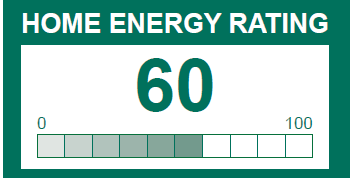
| Home Energy RatingThis rating from 0–100+ estimates how much energy the whole home uses – including heating/cooling, hot water, lighting, appliances and even solar energy production or battery storage.
|
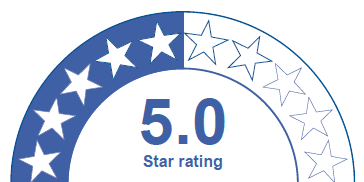
| Star RatingThis is a rating from 0 to 10 that reflects how well the home’s design (e.g. layout, materials, insulation, windows, orientation, and shading) maintains comfortable temperatures in your local climate. A higher Star Rating indicates less reliance on heating or cooling appliances, so it is a more efficient home.
|
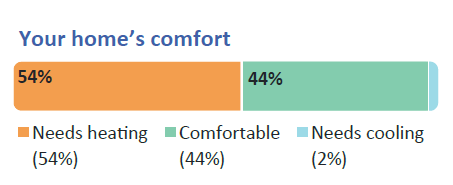
| Your home’s comfortThis indicates the proportion of the year during which the home should stay ‘comfortable’ (based on standard temperature thresholds). It gives a sense of how often you may need to heat or cool your home to remain comfortable.
|
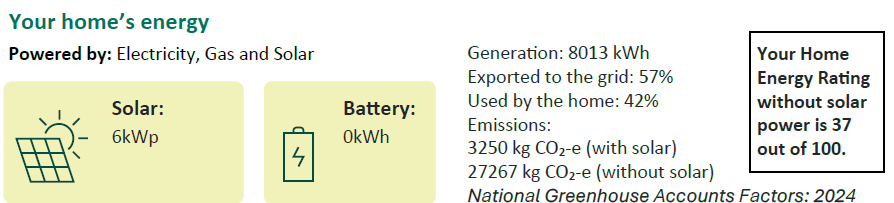
| Your home’s energyThis section summarises where your energy comes from and how it’s used. It shows energy consumption (and generation, if solar and a battery is present), greenhouse gas emissions and the balance between electricity drawn from the grid and energy produced onsite.
|
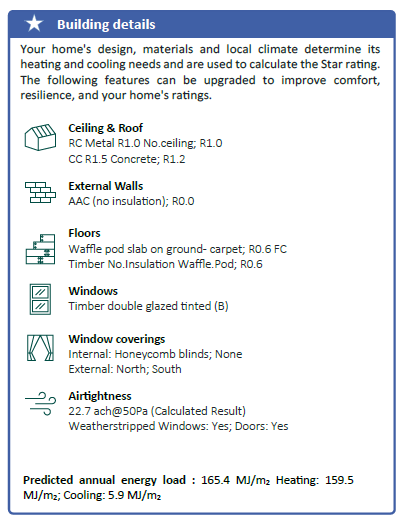
| Building detailsA breakdown of the home’s physical features – insulation levels (roof, ceilings, walls, floors), window/glazing types, airtightness, and construction materials. This helps explain why the home received its Star Rating and indicates the structure’s energy-performance properties.
|
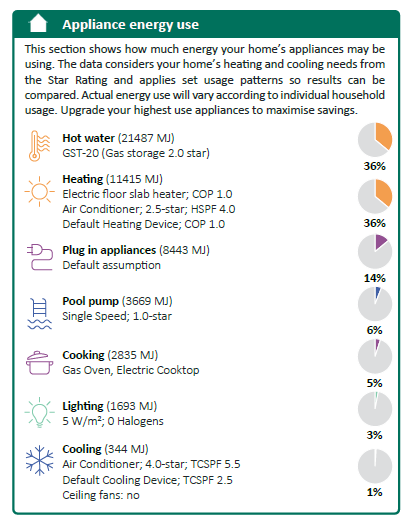
| Appliance Energy useThis section shows which systems use the most energy and helps identify where upgrades or efficiency improvements can produce the greatest savings. It provides predicted annual energy consumption based on set usage patterns (heating, cooling, hot water, lighting, appliances, etc.). |
Who can issue a Home Energy Rating for existing homes certificate?
Only Home Energy Rating assessors accredited by NatHERS are authorised to issue official certificates for existing homes. They are trained, accredited, insured and monitored through a professional accrediting organisation appointed by the Australian Government, ensuring their work is quality assured and meets national standards. Certificates are generated using accredited software and include features such as the Home Energy Rating logo, colour formatting and a QR code that links to a secure online record.
Training certificates can be generated from those undergoing assessor training. These certificates are distinguished by a black and white colour scheme and the application of a ‘training’ watermark.
Last updated
24 Jun 2026